
Agribusiness production thrives on several factors for optimal yield, and the difference between crop soils, especially sandy and stony soils, can play a key role in achieving the farmer’s goal.
Agricultural machines, in fact, in order to work at their best, need to work on the soil suitable for their technical characteristics. Misuse can lead to machine breakdown, excessive maintenance (routine or extraordinary), and in the worst cases, replacement of the farm machine.
Soil conformation often proves to be a decisive factor in providing the crop product with certain organoleptic characteristics, however, different soils require different machines.
In Italy, various soils can be classified according to the following criteria:
- Soil acidity
- Weaving
- Presence of stones
The ph value of the soil, is not relevant to the use of the mulcher, as it does not affect its use. While the presence of stones and texture condition the use of agricultural machinery.
Difference between stony soil and sandy soil
Understanding one’s land type is the first step a farmer must take when planning to purchase farm machinery, especially the mulcher.
Soil texture is generally improperly referred to by using the term “Sandy.” However, this wording can be expressed when the sand occupies at least 60 percent of the growing area and only, and exclusively, if the grains are coarse-grained.
Texture, in its correct classification, provides four grades of soils composed of sand as follows:
- clayey (fine-grained)
- silty (medium grain)
- sandy (coarse-grained)
- frank (where particles of various grain sizes are present, but none predominate)
It should be noted, however, that the soil particles that make up the growing area are not uniform, and that this classification refers to the average number of grains in the soil.
The degree of texture determines several components of the agri-food product, but it also helps the farmer understand the best work to be done in harvesting. Among the most important factors include:
- capacity of the soil to retain water
- Capacity of the soil to retain nutrients
- tendency to compact
- tendency to remain loose
- root permeability
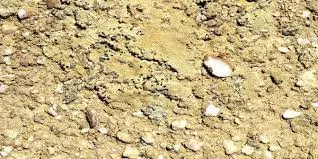
Equal treatment deserves soils with a large presence of stones, which are often referred to as stony, but again, just as with texture, this definition reflects only one of the classified elements.
Land with the presence of external bodies is classified as follows:
- Stony or stony soil (large presence of stones)
- Gravelly soil (sandy, with small stones)
- Peat soil (composed of a larger proportion of peat)
- Limestone soil (with a strong presence of calcium, calcium carbonate above 20%)
The presence of stones and pebbles does not affect the finished agri-food product, but it can make it more complex to process, especially the mulcher. Stones, in fact, can lead to breakage of the machinery and its tools, knives and mallets.
In order to protect their machinery, the operator should ensure that stones are removed from the chopping path in order to safeguard the farm producer’s production and investment.