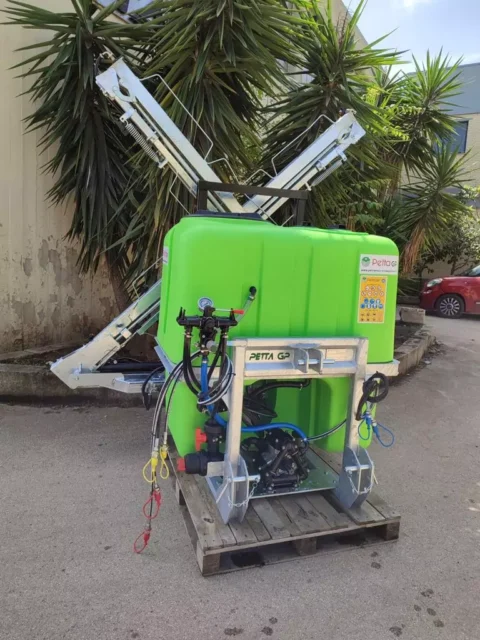
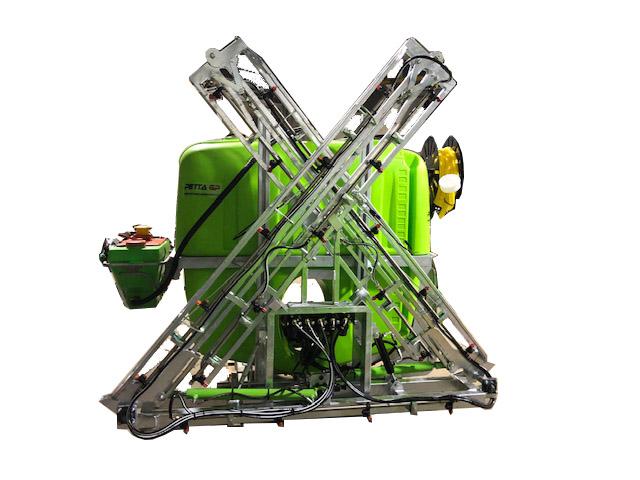
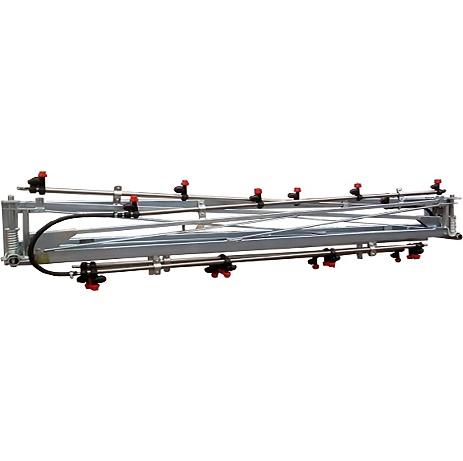
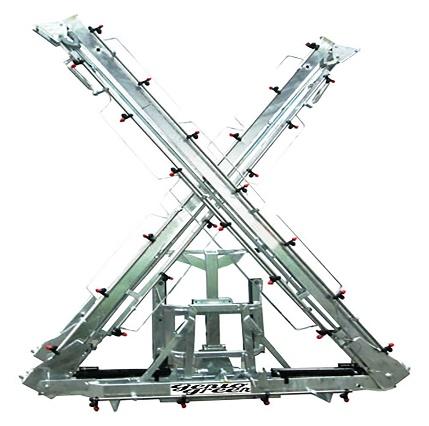
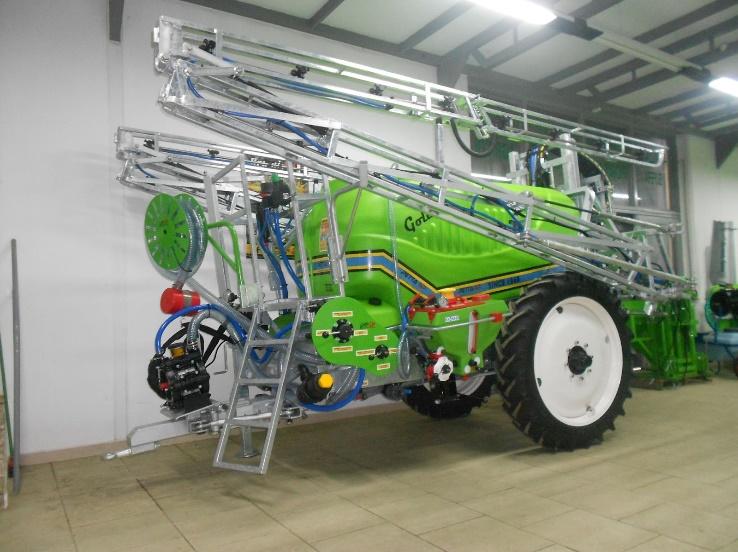
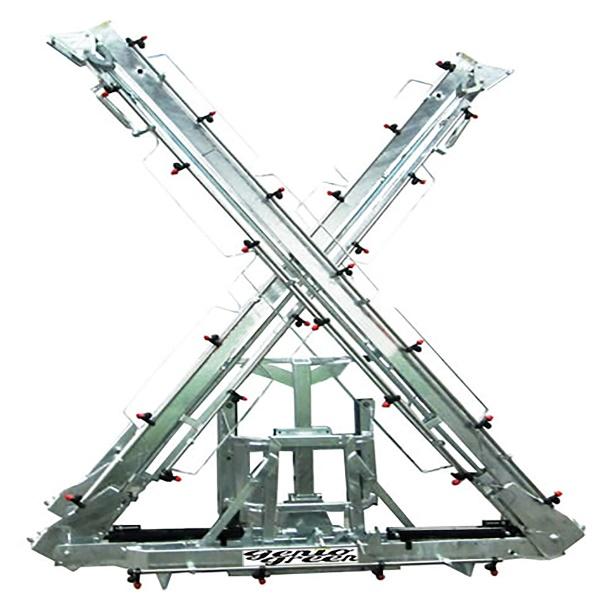
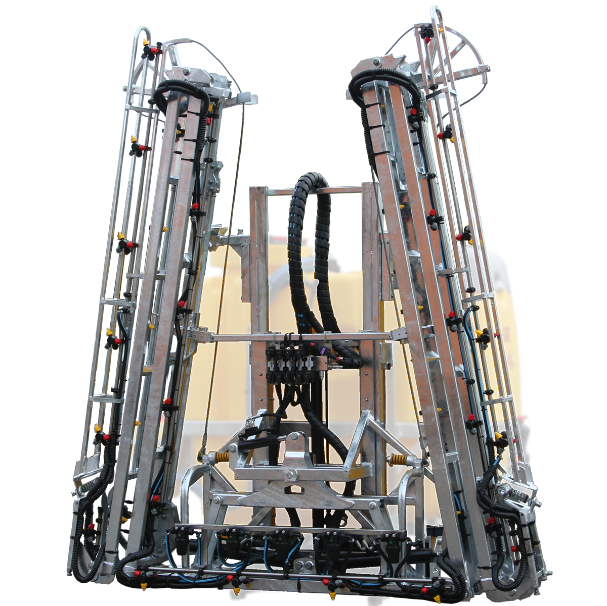
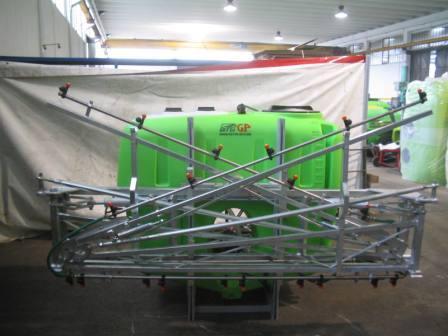
Hydraulic cross-locking booms have a working width of 12 to 15 meters and are mostly combined with carried sprayer.
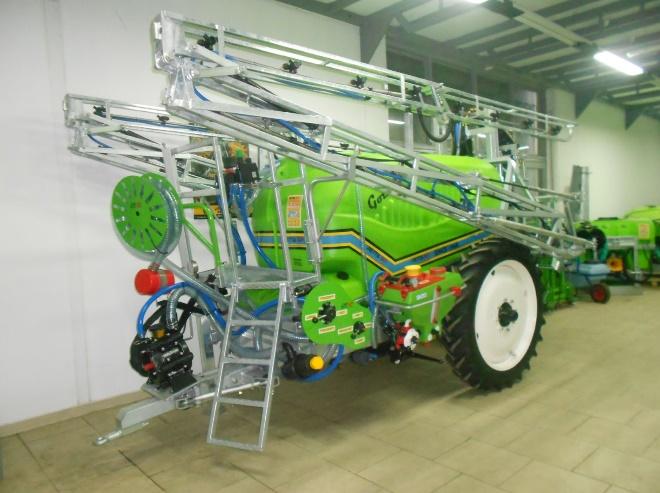
In contrast, those with side closure, which have working widths exceeding 18 meters are mainly used on trailed sprayers.
What is the recommended combination of bars
Tentatively, the ideal choice of pulverizer might follow the pattern below:
- With 400- to 600-liter carried sprayers: 6- to 12-meter bars
- With carried sprayers from 600 to 1200 liters: bars from 10 to 15 meters
- With carried sprayers from 800 to 1200 liters: bars from 12 to 18 meters
- With carried sprayers from 1200 to 1800 liters: bars up to 27 meters
- With trailed sprayers from 1000 to 1500 liters: bars from 12 to 15 meters
- With trailed sprayers from 20 to 40 quintals: bars up to 27 meters
Setting up the sprayers
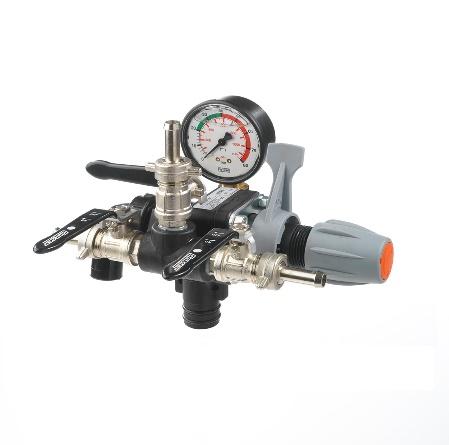
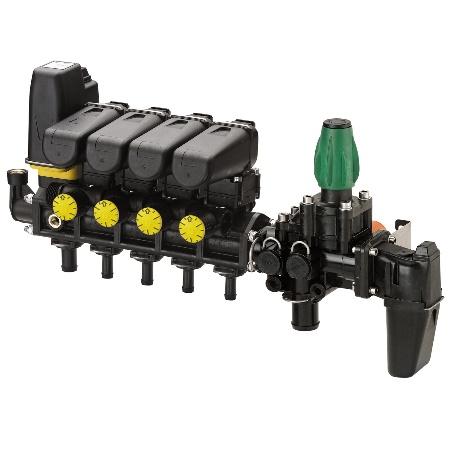
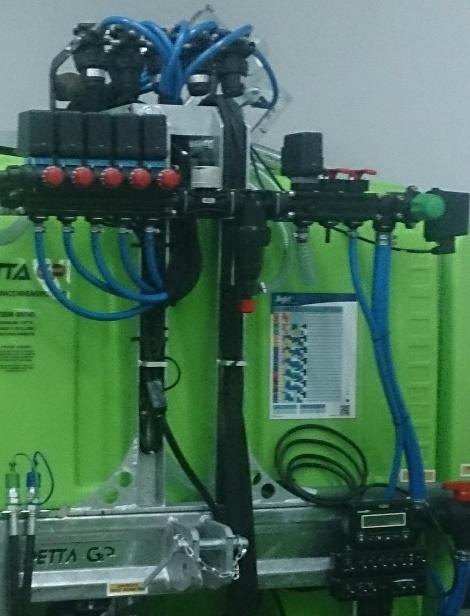
Sprayers are highly customizable equipment depending on the type of crops, crop extension, and type of tractor (equipped with parallel guidance, isobus). In fact, the distribution of plant protection product could be done through the use of manual, volumetric-manual, volumetric-electric, electric on/off, and computer controls.
To these can be added countless accessories such as:
- nozzle type
- shock absorbers bar
- hydraulic correctors
- hydraulic lifters
- air sleeve
- computer with GPS receiver
- tracefile
- filling meter
- self priming pump
- electrohydraulic systems
- seletron jets
Proper pesticide treatment depends on spray homogeneity and delivery stability. This last factor is most important because a bar that is not perfectly parallel to the ground can be the cause of:
- drift
- overdose of plant protection products
- Insufficiently sprayed areas
Other factors that influence to the proper phytosanitary treatment result from:
- bar height above the ground
- Speed of work execution (must be constant)
- nozzle flow rate
- correct speed in relation to the nozzles used
- agitation system (mixing of plant protection products)
- filters (blocking function for particles that may occlude or change the amount of product dispensed per hectare)
In addition to these factors are elements inherent in safeguarding the environment and the operator.
BEST WEEDING PERIOD
In the agribusiness sector, weed control is vital to protect crops from pests, weeds, and weeds that undermine crops, which is why it is important to understand the best time to carry out this procedure.
Generally speaking, but it is not a fixed rule, the best time to use sprayers and spray booms is from spring onward. This is because most plant protection agents work best at temperatures between 10 and 25 degrees.
However, the correct answer to the best time to carry out herbicide operations is: when needed. This may seem a trivial answer, however, activities and crops are different and occur at different times of the year.
For example, vegetables are grown throughout the year, requiring constant herbicide intervention in order to protect the agri-food product.
However, depending on the different periods, activities with sprayers and spray booms are always carried out by the farmer. This is because many pathogens, especially animal pathogens, tend to form after rains and periods of high humidity. Moisture, in fact, tends to promote the establishment of grass and insect larvae.
The grass, in order to feed itself, risks depriving fruit trees of water and nutrients from the soil. Insects, also in the business of feeding, are likely to attack the fruit on the tree, bringing potential disease and damage to the produce.
What is the best time for weeding activities?
Weeding can be done in two distinct stages:
- Pre-emergence
- Post-emergency
Pre-emergence activity, which often coincides with pre-seeding, is an operation designed to disinfest cropland from weeds that, by arising, could create damage to the future fruit plant. A preventive treatment promotes the elimination of competing grasses and reduces the risk from insect attacks.
Post-emergency treatments, on the other hand, should be carried out when weeds or animal hazards, are already present in the soil. In general, these treatments are carried out after planting during particularly rainy and/or wet periods, especially to defend fruit plants from insects.
If the pre-emergence activity is easily scheduled, the post-emergence activity can be predicted by keeping abreast of weather conditions, however, sudden rains dictate that the level of attention must be kept very high in order not to waste part of the investment.
In addition, knowledge of the phenological cycle of agribusiness products helps to study the best activities to preserve one’s crops.
In general, the following outline can be followed for guidance on when to weed:
- Fruits: from February to August
- Vegetables: year-round depending on the crop planted
- Cereals: March to May (pre- and post-transplant herbicide treatments are generally done in February)
NOZZLE TYPES
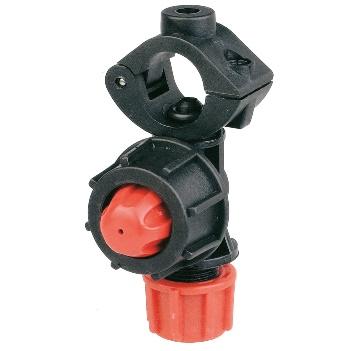
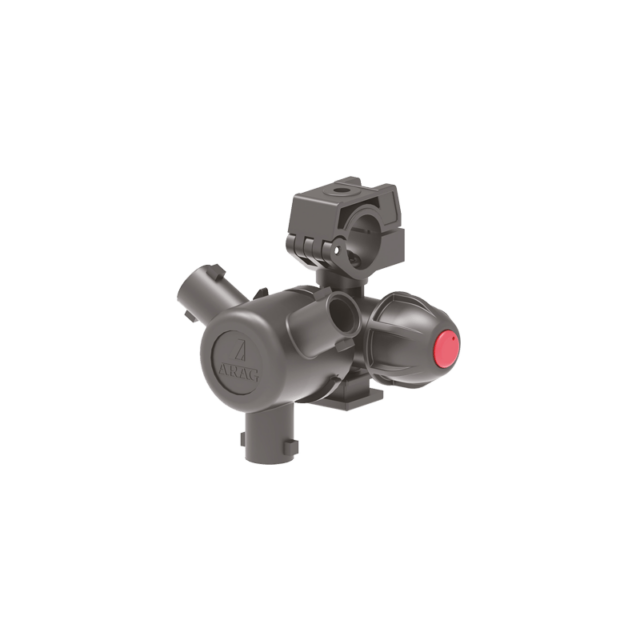
Agricultural spraying machines, whether sprayers or weed control units, owe the successful distribution of pesticides to a small but vital component: the nozzle.
The nozzle is the terminal on the machine that distributes the pesticide and converts the energy that the fluid possesses into kinetic energy. The nozzles, if well calibrated allow for minimal drift, that is, the plant protection solution not hitting the target.
Well-calibrated, therefore, allow both reduced economic expenses and potential risks to the environment and people.
What is the right nozzle for your farm machinery?
The nozzle, like any component in agricultural production, requires of the right choice in order to achieve the desired result by the farmer.
Its function of creating droplets of water/agropharmaceutical solution comes from its mechanism of producing droplets to be distributed on plants in order to carry out treatment.
The choice of nozzle depends on the type of application the farmer intends to make. In fact, for field crops there are a wide variety of nozzles that can be used depending on the types of treatments:
- herbicides
- fungicides
- insecticides
For each of these categories, there are additional variables that intervene when contact treatments or systemic treatments are given.
This also applies to the choice of nozzles to be used on atomizers.
Commercially available nozzles
There are different types of nozzles on the market, depending on the mechanism, but four macro categories are generally given:
- spray nozzles by pressure or hydraulics
- pneumatic spraying diffusers
- rotary nozzles (centrifugal pulverization)
- atomizers or foggers (thermal spraying)
The hydraulic spray nozzle turns liquid into spray by passing the solution through spray tip. It is also divided into: threaded body, filter, spray tip and locking ring.
Its operation is simple: the greater the pressure, the smaller the outlet orifice, the finer the droplets distributed.
Several categories of these nozzles are found on the market:
- slotted
- turbulence
- mirrored
- full cone
The choice of these nozzles varies according to the type of crop, the amount of liters per hectare to be distributed, the speed of the tractor machine, the type of pressure and the type of treatment.
For the purpose of product distribution per hectare we will provide mathematical formulas, which are easy to understand, to better understand the choice of the right nozzle for one’s needs.
To calculate the formula for herbicide groups, the steps below should be followed.
If we want to obtain the liters per hectare that the sprayer distributes at a given pressure, at a given speed, and with a given type of nozzle, we must use the following formula:
Liters per hectare (lt/ha) = 60000*lt/min (per nozzle) all divided by kilometers per hour(km/h) and distance (L) in centimeters, between nozzles.
Example:
60000= fixed number
1.82= lt/m AITTJ60 nozzle at 4 bar (TEEJET anti-drift nozzle)
5 km/h=speed of the tractor
50 cm= L (distance between one nozzle and the other)
60000 *1.82/ 5*50= 436.80 lt/ha
If, on the contrary, we intend to calculate the gallons per minute of each individual nozzle, the mathematical formula to be used will be as follows:
Lt/ha*Km/h*L
_____________ = 500*5*50/60000= 2,08
60000
Data taken with bar height from the ground of 50 centimeters.
Pneumatic spray diffusers the spray is generated by the collision between the transmitted fluid and a high-speed air stream produced by a fan. The higher the air velocity, the finer the droplets will be.
Rotary nozzles consist of a by a toothed rotating disc that rotates by a motor while liquid is conveyed at low pressure to the center of the disc. Finally, the indentation of the disc contributes to the creation of the drops. Fineness is derived from the speed of the disk: higher speed creates smaller droplets.
In Nebulizers, or foggers, the mixture is pulverized by the stream of hot gases that are produced by combustion of a small engine.