
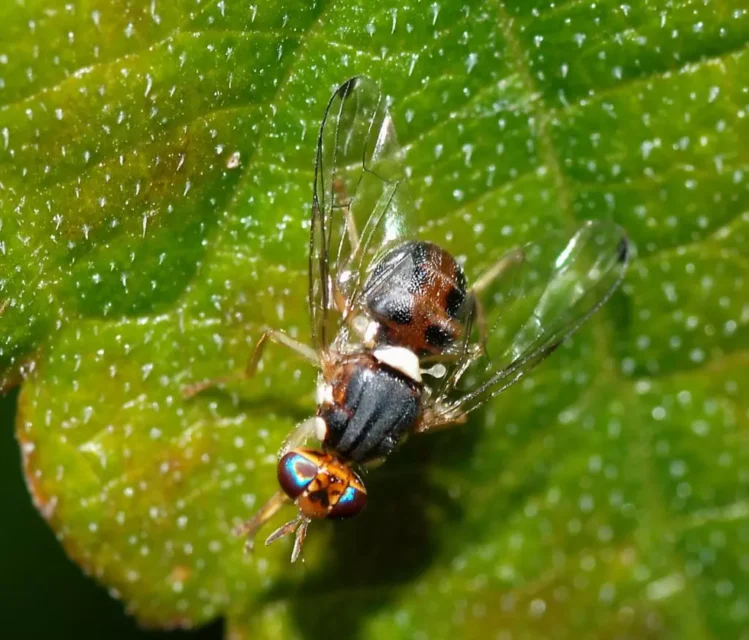
In agriculture, croplands often fall victim to animal pathogen attacks, and in late summer one of the biggest risks is the olive fly.
This insect, scientifically called Bactrocera oleae, is a very serious threat to crops, especially olives.
In fact, farmers tend to prevent the proliferation of this fly with preventive treatments starting in the second half of August. However, increasing the risk of possible growth of these animals may also be climatic causes. In fact, Bactrocera oleae is used to lay its larvae, inside the drupe of olives, even after rain events.
Therefore, in addition to scheduled pesticide treatments, the farmer must know how to act promptly with extraordinary interventions to protect the crop.
When does the olive fly develop?
This very harmful insect, like all living things, develops its own ideal habitat to grow and thrive. The problem, for farmers, is that this particular type of fly lays its eggs inside the fruit of the olive tree, jeopardizing their work and investment.
Generally, Bactrocera oleae lays its eggs in late August, finding the right balance of temperature, moisture level and olive ripeness at that time of year.
In general, the ideal conditions for the proliferation of this insect are:
- Temperatures not exceeding 32-34 °C.
- Climate with high humidity
- Early cultivars
- Table or dual-purpose cultivars
- Cultivation carried out under irrigation
However, during olive ripening, Olive fly can appear under the following conditions:
- Lowering summer temperature
- Rain
- Increase in the degree of humidity in the air
The growth of larvae leads to both qualitative and quantitative damage. In fact, the larvae subtract the amount of pulp in the olive, decreasing the amount of oil that can be extracted. Table olives, when stings are present, are also discarded from the production line.
In addition, the oil extracted from attacked olives is of lower quality, with a higher degree of acidity and lower shelf life of the final product.
What treatments to make to prevent olive fly?
As with all fruit prevention treatments, the olive tree needs some good preliminary practices. First, it is ideal to practice grassing to control insects and moisture level within the growing medium. In addition, another good rule is to practice not too much recurrent pruning in order to avoid too many fly attacks.
Some agricultural entrepreneurs create a climate of biodiversity, that is, they encourage the growth of insects that tend to threaten the fly, preventing the attack on the fruit. However, this practice is not the most widely used for a number of reasons.
In sparse soils, it is customary to use mass fly monitoring and trapping through chromotropic traps. In overgrown cropland, this practice would become too economically costly for the farmer.
Other entrepreneurs use protein baits to deter and kill the insect.
The most widely used practice to prevent the attack of this pathogen is the distribution of a solution of water and pesticide (or natural solutions if the farmer produces under the Organic label) using sprayers or knapsack pumps.
This solution is the least economically expensive and provides faster treatment and wider coverage in the distribution of the defensive solution. This practice, moreover, provides additional benefits when performed through the right spraying equipment, which can achieve more effective and homogeneous penetration within the vegetation.
How to choose the right atomizer for your olive tree
For this type of orchard, ventilation is an essential element for successful treatment. In fact, being able to achieve proper spraying of pesticides is vital to achieve the best possible result, which must also be supported by actual economic savings, related to absorption as well as less damage to the surrounding environment.
These vital issues have been extensively described in our atomizer buying guide (available by clicking here).