
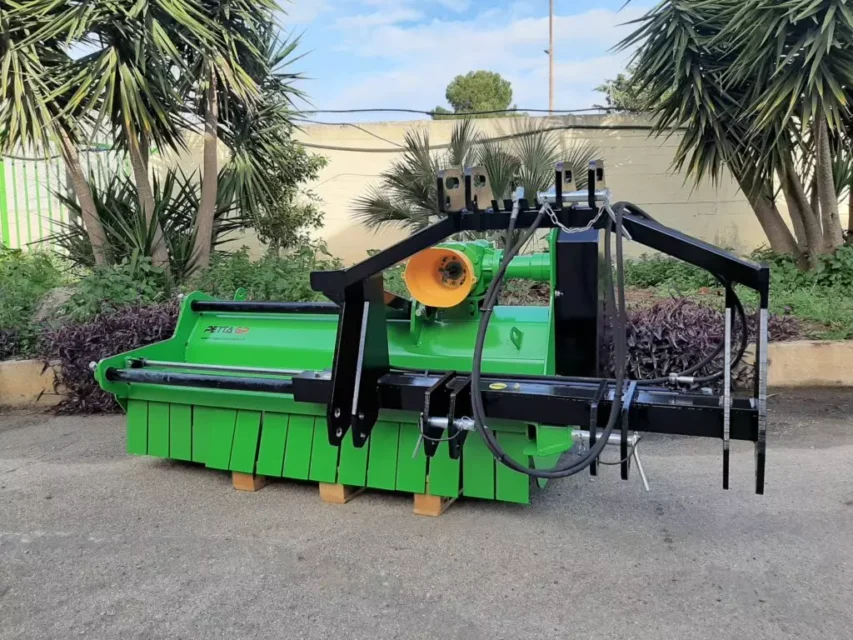
In the agricultural field, among the many machines used, the flail mower is one of the most important, which is why its maintenance is so important. In fact, this machinery, which cleans the soil of pruning debris and grasses, is likely to be damaged if used improperly, causing high repair costs.
However, negligence is not the only risk factor: in fact, like any mechanical machinery, time and wear and tear can compromise machine components leading to repairs, and in the most extreme cases, replacement of the mulcher.
Shredder maintenance can be divided into two major macrocategories:
Routine maintenance
Extraordinary maintenance
The two types of maintenance for flail mowers
Today, there is often a tendency to think of maintenance activities as a practice to be carried out only following damage to machinery. Instead, failure to care for the vehicle can lead to damage, or aggravation, that can be avoided or contained through careful daily maintenance.
Routine maintenance
Routine maintenance includes all the practices that should be carried out on a daily basis in order to reduce risks and preserve proper operation of the mulcher while working. Among the activities to be performed regularly, the most important are:
Lubrication
Cleaning
Visual inspection
The practice of lubrication is useful to protect mechanical parts:
– bearing supports
– rolling bearings
– plain bearings
– sliding parts
These Components, during work are the most subject to wear and if not properly lubricated can cause extensive damage even on the rotor axles, also can increase the stress of the mulcher with most often costly consequences.
Bearing lubrication is essential and should be carried out periodically, remembering that there are no set times for this type of maintenance and it is advisable to carry it out every 6 to 8 hours, and in exceptional cases to anticipate it. In addition, it is recommended to use good quality grease, and possibly lithium grease.
Cleanliness, often an underestimated factor, can lead to corrosion and friction of moving machine parts, leading to sanding, corrosion, and potential damage. In addition, dirt may hide holes or damage already present. Cleaning the inside of the body is an operation that should be performed especially in cases where clods of earth, and/or grass, create a “plug effect,” causing considerable rotor friction, excessive tractor absorption, possible damage to rotating parts, and poor or ineffective chopping results.
Finally, visual inspection allows for the detection of abnormalities that over time could increase the damage and lead to worsening of the affected parts. In addition, the operator should always make sure that the ground to be shredded should be free of stones that could irreversibly damage mallets, knives and more. Visual inspection is important to safeguard the gearbox, the extension , which are equipped with special level markers that should always be kept under control; it also allows for early replacement of damaged belts and all parts that are normal wear and tear such as:
bats
pivots
supports and bearings
Oil leakage from oil seals.
Extraordinary maintenance
Extraordinary maintenance almost always coincides with the repair of damage, and in minor cases when the machine is not used frequently.
The most common practices of this type of maintenance include:
belt tensioning
replacement of wear parts
the replacement/refilling of oil
Belts, which have the function of transmitting motion and protecting against overloading, need special maintenance in order to protect the machine. In fact, an overstretched belt is likely to fatigue the drive components, increasing the risk of failure. A belt with little tension, on the other hand, risks damage to the belt structure itself in addition to slippage, loss of efficiency, and overheating.
There are belts of various kinds on the market:
toothed
smooth
section A – B and other
Both factors are crucial to the durability of the belt itself.
Replacing worn tools, mallets and/or knives, is much more complex as it requires experience and wisdom as it is a very delicate operation to perform. Worn blades and/or knives can, in addition to inefficient and undesirable work, lead to rotor imbalance and change the work effort capacity leading to more wear and slower work and increased friction of mechanical parts:
supports
bearings
Changing the oil is a fundamental practice to protect the mechanical components of the vehicle. The gearbox along with the extension are the parts that need the most attention, in fact the lack of lubricant resulting from damage to the oil seals can lead to excessive overheating of the rotating parts and the casting itself resulting in gearbox failure.